Race to Refresh
Windows 10 support is ending. Sales teams needed a reason that sticks, and they needed it fast. So the argument was handed to a car.
01
The problem
A deadline is not an argument
Windows 10 support is ending. That is a fact, it has a date attached, and on its own it persuades nobody. A deadline tells a business when something stops. It does not tell them why they should care, and it certainly does not help a salesperson in front of a finance director who has a working estate of machines and no appetite to replace them.
The gap the film had to close is the one between an IT department’s problem and a business’s problem. End of support is an IT phrase. Nobody outside IT feels it. And the people signing off a fleet refresh are almost never in IT.
So the brief was really about translation. Take a support lifecycle, which is abstract, dated and dull, and turn it into something a room understands in the first fifteen seconds.
02
The solution
Everybody already understands an old car
The film opens on a car rather than a computer. A car that was best in class when you bought it, and is now reaching the end of its support: no updates, no parts, no servicing. That sentence needs no translation into business language, because everyone has either owned that car or dreaded owning one.
From there the substitution does the work. The new car is sleek, faster, more efficient and fully supported by the manufacturer. That is Windows 11. And because Dell and McLaren already share a partnership, the metaphor could be shot with real cars rather than assembled from stock, which is the difference between an analogy and an argument.
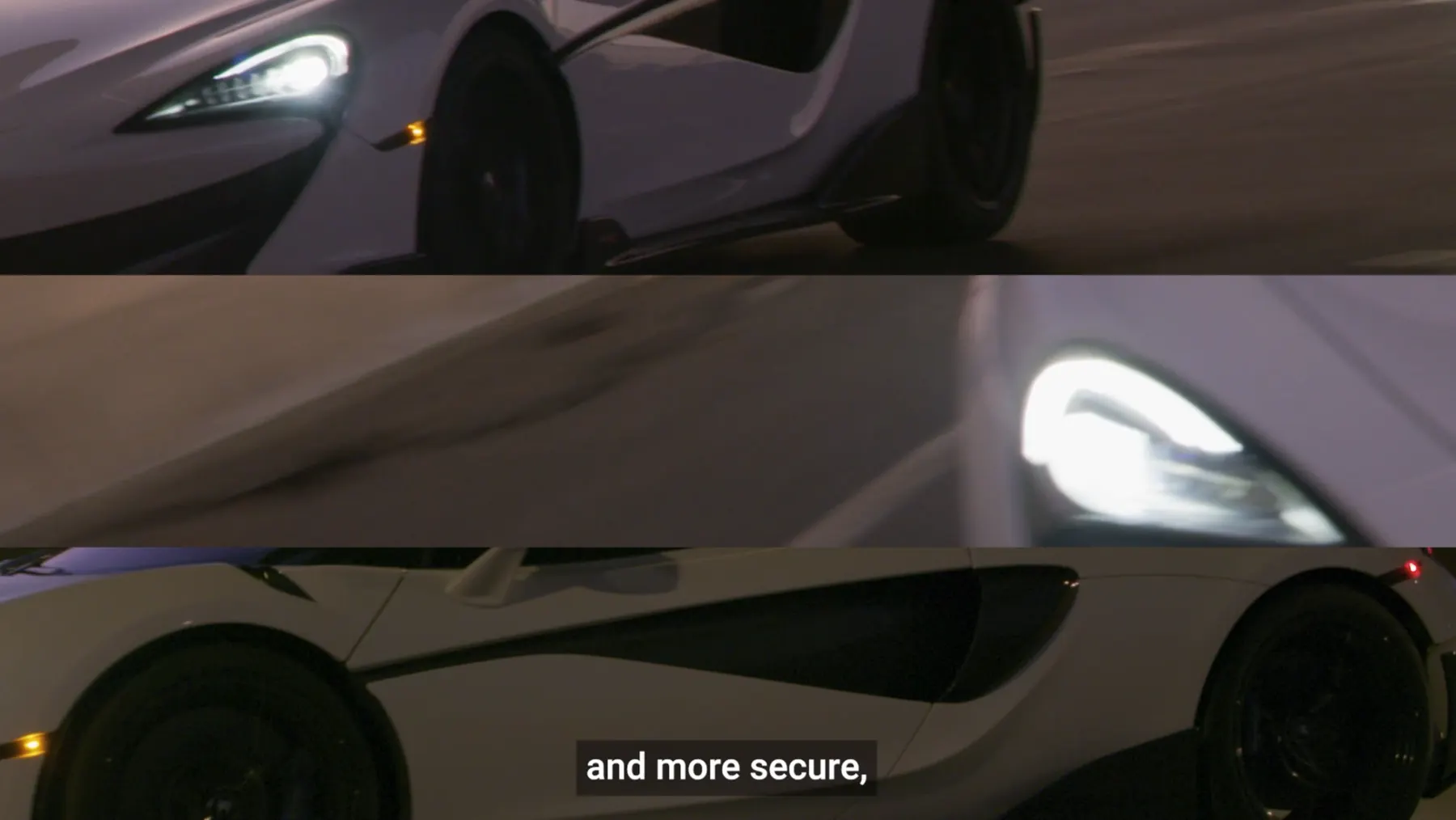
Worth noticing that the car is almost never seen complete. It arrives as a headlamp, a wheel arch, an air intake, a seatbelt latch, a start button. Keeping it in fragments stops the film becoming a car advert, and it keeps every shot tied to a specific claim rather than to the vehicle itself.
Why the metaphor holds where most do not: it maps one to one. End of support maps to no parts or servicing. Security maps to the key and the immobiliser. Performance maps to the engine. A metaphor that only works at the headline falls apart by the third point, and this one had to survive two and a half minutes.
03
The film
Two and a half minutes, one idea
Sound on. The voiceover carries the argument and the cut carries the metaphor, so the two are doing different jobs rather than describing each other.
04
The substitution
Every claim gets a physical object
The structural rule of the edit: no benefit is stated without something you can touch appearing beside it. Security is not a shield icon, it is a seatbelt latching and an engine start button lighting up. That is what stops a list of features feeling like a list of features.
-
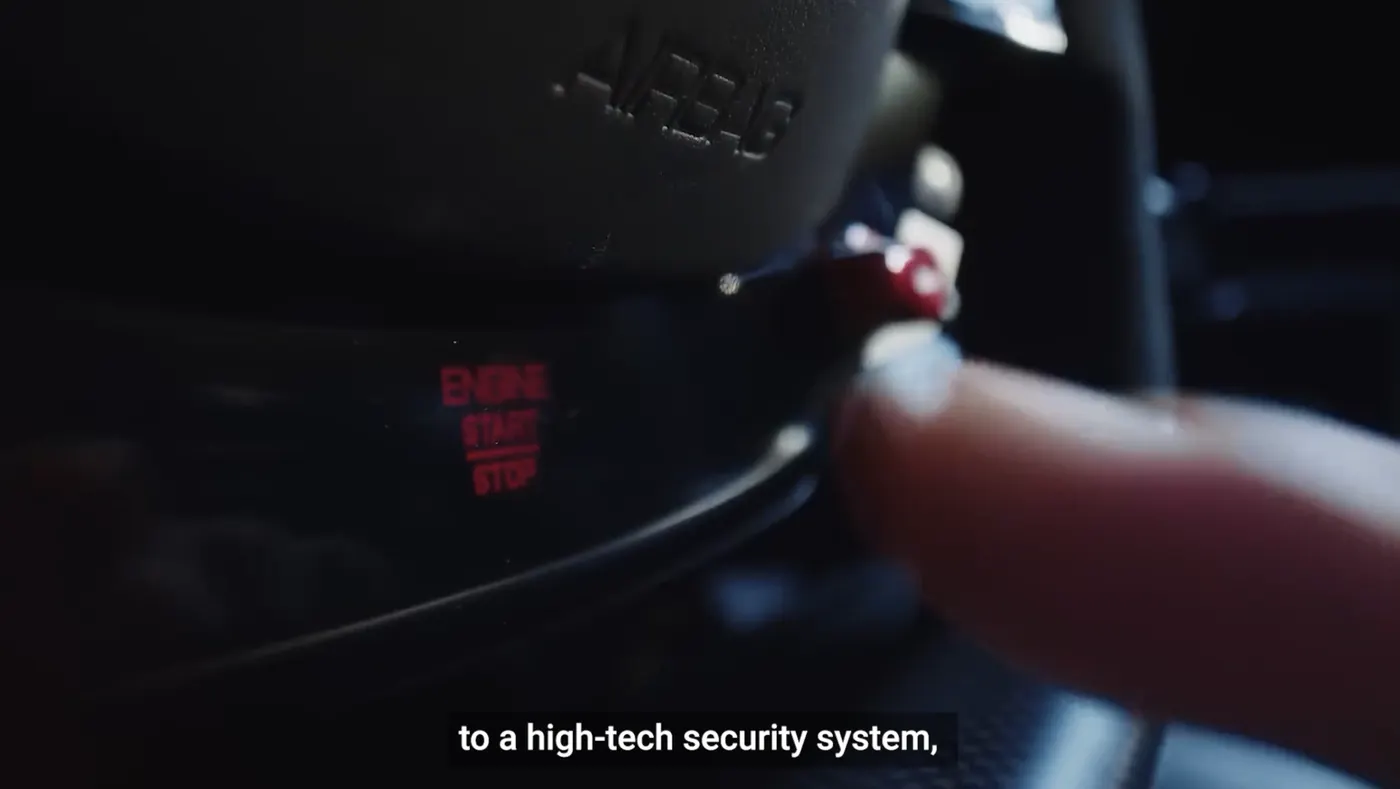
“Like upgrading from a basic key to a high-tech security system” -
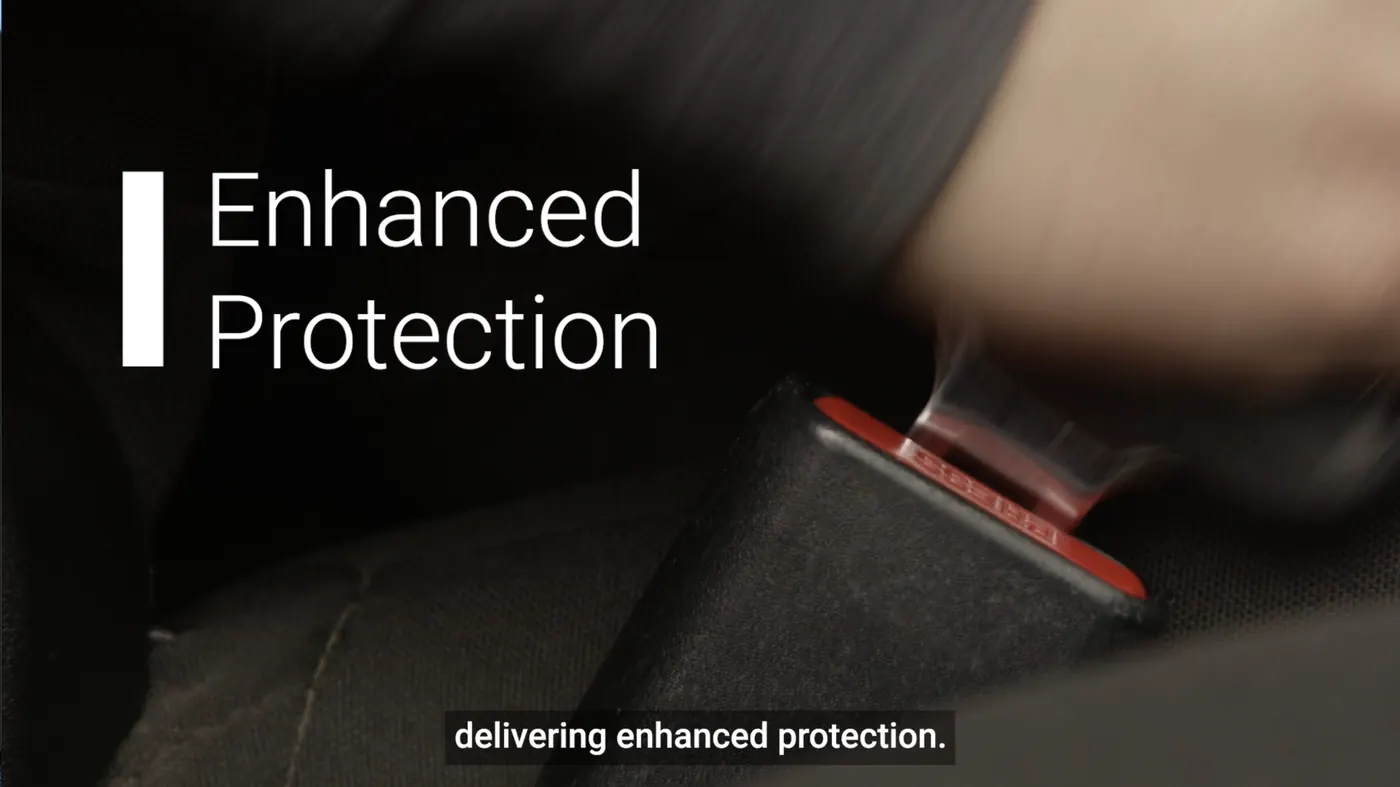
The abstract claim, given a latch and a click
The on-screen type is the one place the film stops being a car and becomes Dell. A single heavy bar sets the left margin and the phrase hangs off it, the same device on every card, so the graphics read as one system rather than as decoration applied shot by shot.
-
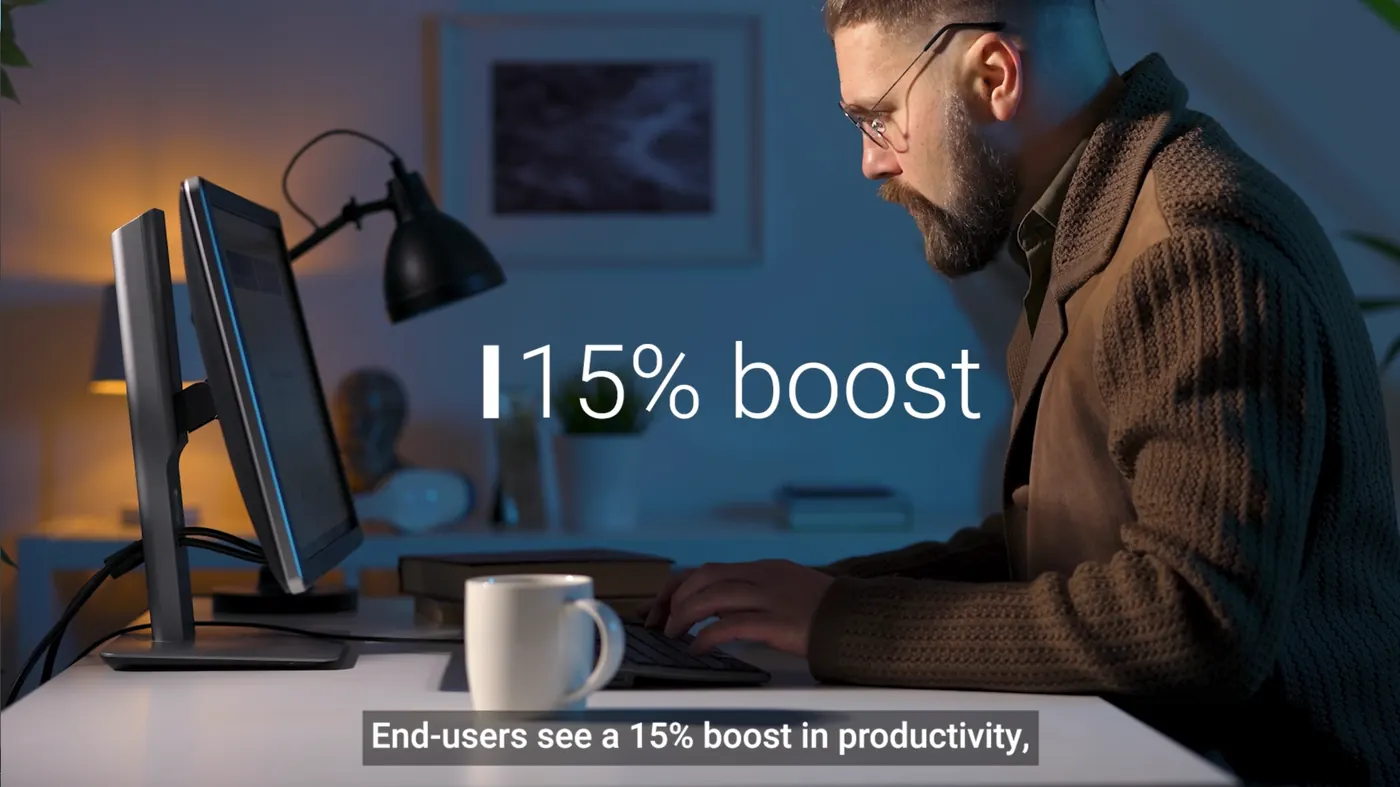
The same bar, the same position, a different claim -
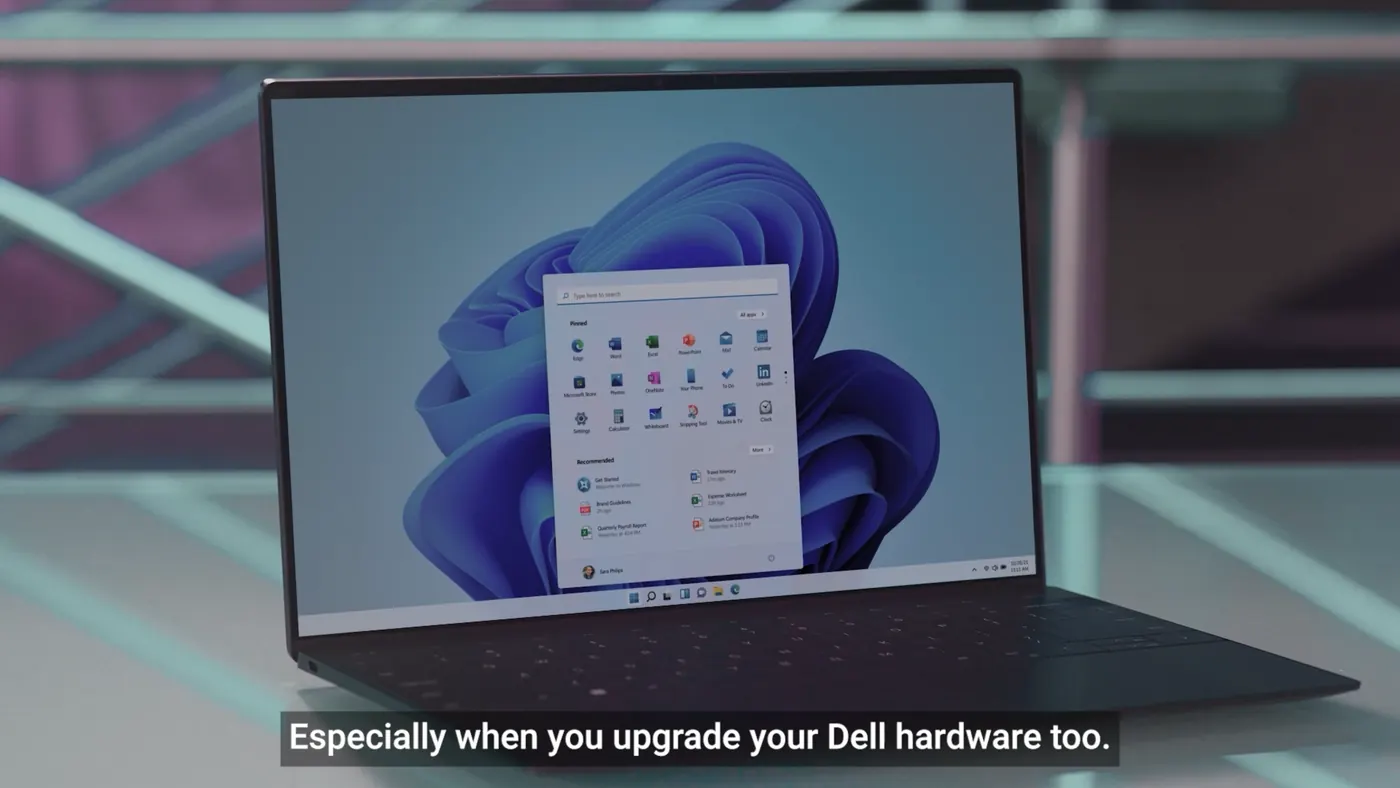
The product, arriving only once the case is made
The sequencing decision: the Dell machine does not appear early. The film spends its first stretch entirely on the car and on Windows 11 before the hardware enters, because a salesperson who leads with the box loses the room. Lead with the reason, close with the thing you are selling.
05
The numbers
Three figures, spaced out on purpose
A film like this lives or dies on whether the statistics land. Stack them and the audience stops counting; strand one on its own and it sounds like the only one you had. Three carry the middle of the script, each given its own card, its own shot and its own beat.
| 25% | Faster deployment and management for IT teams · and fewer help desk tickets |
|---|---|
| 15% | Productivity boost for end users · attributed to Copilot |
| 14% | Lower energy use · reduced cooling, contributing to lower TCO |
Note who each one is aimed at. The first is for IT, the second for the people using the machines, the third for whoever signs the invoice. Three numbers, three different rooms, which is why they are not delivered together.
Everything technical sits underneath rather than on top. TPM 2.0 and Zero Trust are named once and then left alone, because the audience that needs those two terms already knows them, and the audience that does not will not be won by them.
06
Four languages
A metaphor has to survive translation too
The film ships in four languages, and film is less forgiving than print about it. A page can absorb a longer word by reflowing. A frame cannot: the type is locked to a timing, the voiceover is locked to a cut, and a line that runs long in one market either overruns its shot or gets spoken faster than a person can listen.
Which is why the on-screen phrases are short. 15% boost. Enhanced Protection. Two or three words, set against a bar that can grow without the composition breaking. The subtitles carry the full sentence, the cards carry the headline, and only the subtitles have to stretch.
The bit that travels worst: the metaphor itself. A car reaching end of support means something slightly different in a market where cars are kept longer and independent servicing is normal. It survived here because the film shows a car that is clearly aspirational rather than ordinary, so the point lands as desire rather than as a maintenance schedule.
07
Outcome
What I would point at
The title does the job the whole film is trying to do. Race to Refresh is a deadline and a metaphor in three words, and a salesperson can say it out loud without feeling like they are reading marketing copy at someone. That is a low bar in theory and a rare thing in practice.
The other thing I would point at is restraint about the product. Dell hardware appears late and briefly. Everything before it is spent making the customer want to be somewhere they are not yet, which is the only condition under which a fleet refresh is an easy conversation.
What I would do differently: lock the on-screen phrases against the longest of the four languages before the English edit is signed off, not after. Short English type is not the same as short type. Two words in English can be five in German, and finding that out at localisation stage means either re-timing a cut or accepting a card that is tighter than the rest.